Pain Management
Radiofrequency / Radiofrequency Cannula
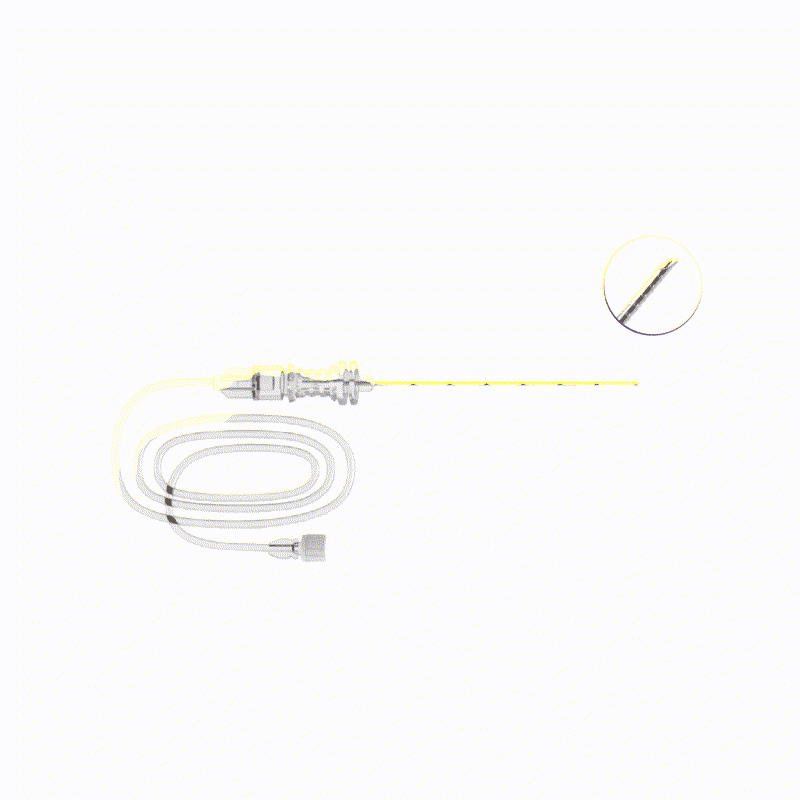
Radiofrequency cannulas can be used for conventional radiofrequency methods as well as for the pulsed radiofrequency method.
Both techniques achieve longer-lasting pain inhibition, particularly in the lower spine.
The sensitive branches of the sensory nerves are identified using X-ray and visual control.
Actual localization is performed through the thermal lesion cannula.
They emit a field that affects the nerve branches so that pain can be eliminated or considerably reduced for 6 to 18 months.
Cannula length can be adjusted to match the electrode and the nerve, providing maximum stimulation precision
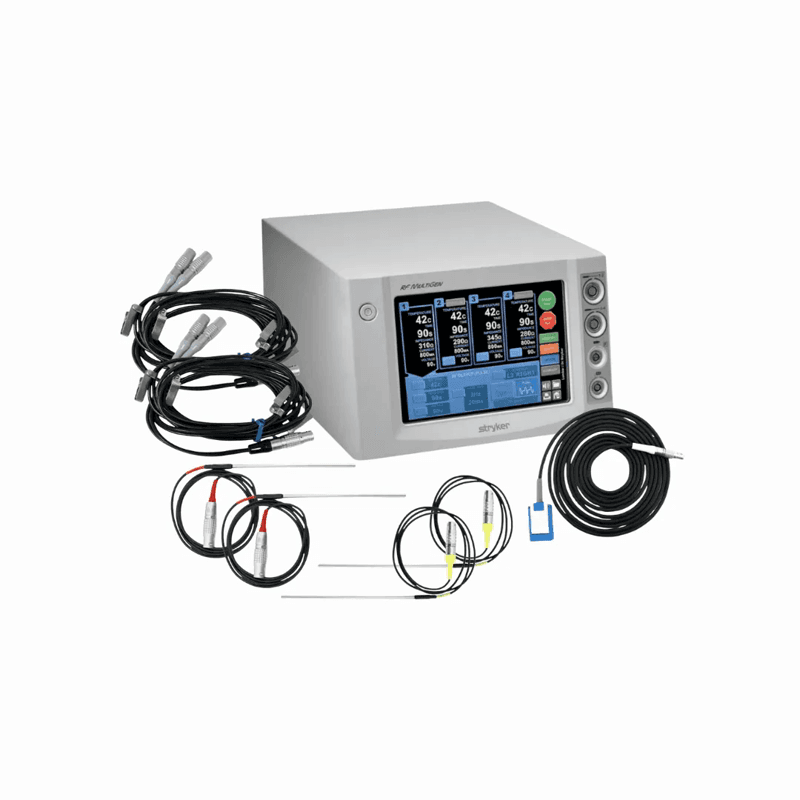
The Stryker MultiGen RF (generator), combined with Pajunk RF electrodes and cannulas, is intended for soft tissue coagulation in orthopedic, arthroscopic, spinal, and neurosurgical applications.
Examples include, among others: facet denervation, percutaneous cordotomy/dorsal root entry zone (DREZ) denervation, trigeminal neuralgia, peripheral neuralgia, and rhizotomy.
The generator applies temperature-controlled radiofrequency (RF) energy to the target nerve tissue through an active electrode.
The generator can deliver RF energy to up to four electrodes simultaneously, using a timed distribution method.
Using one or more monopolar, parallel bipolar, or coaxial bipolar NiTRODE™ electrodes, RF energy application triggers a thermal reaction in the body, producing denervation at the target site.
The generator monitors impedance at the target site throughout the denervation process.
This denervation process inhibits the nerve tissue's ability to transmit electrical signals.
Pain relief is achieved when these electrical signals are interrupted