Regenerative Medicine
PRP: treatment begins before the injection
With evidence of benefit for pain and function in specific indications, platelet rich plasma (PRP) is an important resource in musculoskeletal medicine. The preparation technology is part of that choice.
November 11, 2026
Reducing pain, regaining movement and returning to activities left behind are concrete goals for people living with a musculoskeletal condition.
It is in this context that platelet rich plasma, or PRP, has been gaining ground. Obtained from the patient's own blood, it brings together platelets and molecules involved in tissue signaling and repair processes. Its use is a therapeutic option that deserves consideration based on the diagnosis, the available evidence and each patient's goals.
PRP is a scientifically supported resource that can be part of the treatment of specific conditions. And understanding its potential also means knowing how it is prepared.
Evidence that translates into benefits for the patient
In knee osteoarthritis, a meta-analysis published in 2025 in The American Journal of Sports Medicine pooled 18 randomized clinical trials involving 1,995 patients. The study found clinically relevant improvement in function and pain relief at certain follow up points compared with placebo. Preparations with higher platelet concentrations showed more favorable results in some of the analyses.
For patients, pain and function mean more than the numbers in a study: walking more comfortably, taking part in rehabilitation and regaining independence are the goals that guide the treatment decision.
Response varies between individuals. Even so, the evidence supports the value of PRP as an additional tool in the care of appropriately selected patients.
Biological potential and well defined expectations
Interest in PRP is related to the growth factors and other molecules released by platelets, which can take part in cell signaling and repair mechanisms. This biological basis explains its relevance to regenerative medicine.
This potential must be distinguished from a promise of tissue reconstruction. In knee osteoarthritis, improvement in pain and function does not, on its own, prove cartilage regeneration. The effects on joint structure remain uncertain.
This distinction makes it possible to value the treatment for what it can offer, with clear goals and medical follow up.
XERTHRA™ PRP: technology dedicated to preparation
When using a biological resource, processing deserves attention. The choice of system influences the characteristics of the resulting preparation and how the collection, separation and transfer steps are organized.
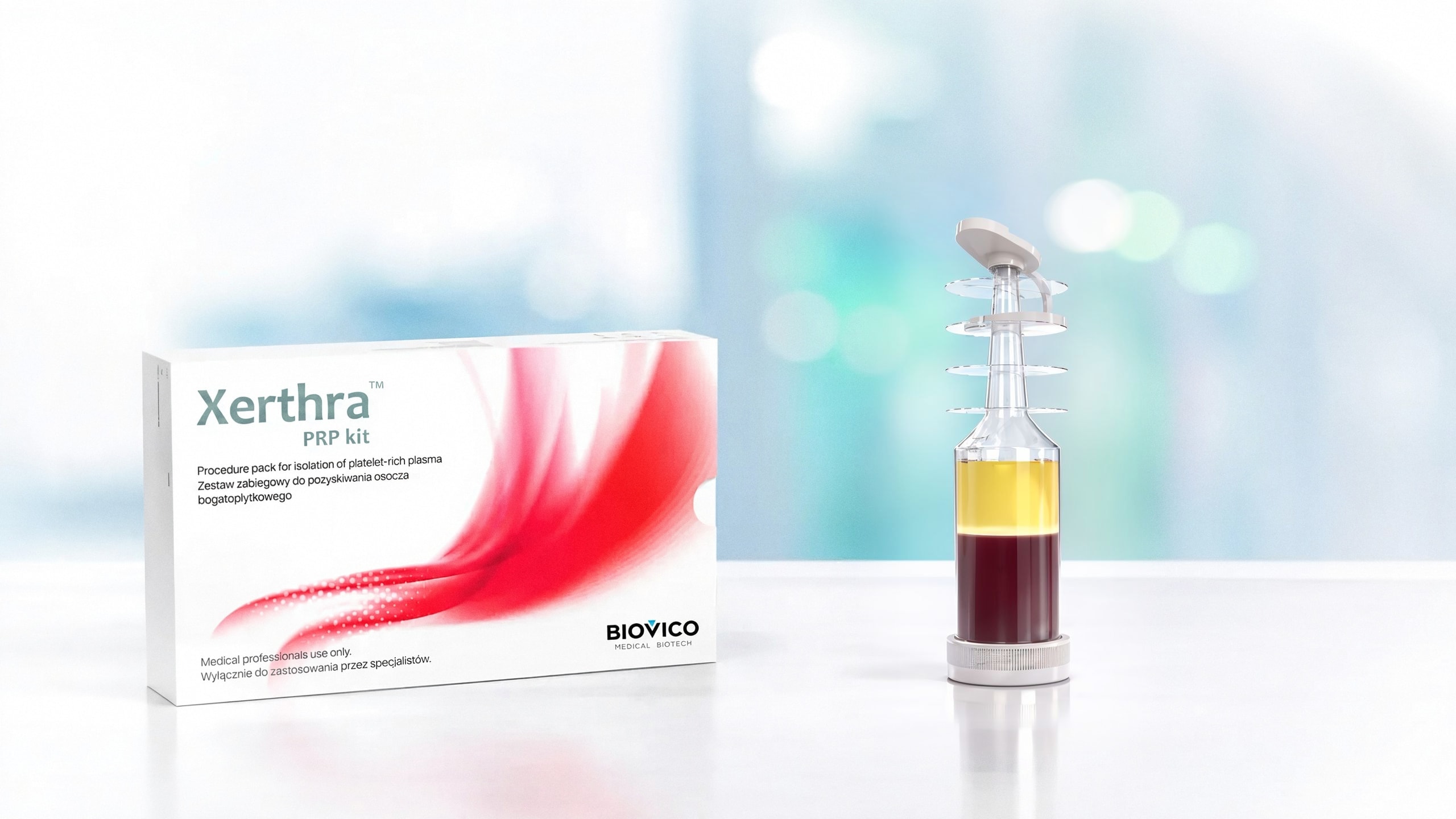
XERTHRA™ PRP was developed to prepare platelet rich plasma from the patient's own blood. According to the technical information provided by the manufacturer, the system combines:
- Closed system processing, with pressure equalization and transfer without removing the stopper.
- Minimal manipulation, with fewer interventions needed during preparation.
- Separation technology dedicated to obtaining PRP, with measurable performance parameters.
In an evaluation carried out at a clinic in London and published by Implai, XERTHRA™ achieved a platelet concentration 9.32 times higher than baseline and a platelet recovery of 87.8%.
These data help characterize the technical performance of the system under the conditions evaluated. They are not a guarantee of clinical results, but they provide objective information for professionals assessing the technology.
Technology and responsibility go hand in hand
CFM Resolution No. 2.464/2026 regulates the adjunct medical use of PRP in specific musculoskeletal conditions. For processing, it requires compliance with applicable sanitary standards and sets a preference for closed systems. It also requires respect for the authorized purpose of devices and for manufacturers' instructions.
The closed system and minimal manipulation features of XERTHRA™ PRP are relevant to this assessment. Whether a practice is appropriate depends jointly on the product documentation, the conditions of the service and the correct execution of every step.
The value of PRP lies in the combination of careful indication, proper preparation and follow up. That is how its potential can be built into a care plan focused on what matters most: relieving symptoms, improving function and expanding the patient's possibilities for recovery.
Discover XERTHRA™ PRP. Contact the Rooter Medical team to request the system's technical information, instructions for use and regulatory documentation.
Educational content. The indication, expected benefits and management of treatment must be assessed individually by the responsible physician.
References
- Bensa A, Previtali D, Sangiorgio A, Boffa A, Salerno M, Filardo G. PRP injections for the treatment of knee osteoarthritis: the improvement is clinically significant and influenced by platelet concentration: a meta-analysis of randomized controlled trials. Am J Sports Med. 2025;53(3):745-754. DOI
- Federal Council of Medicine (CFM). Resolution CFM No. 2.464 of July 2, 2026. Regulates the use of platelet rich plasma as an adjunct medical procedure in the treatment of specific musculoskeletal conditions. Diário Oficial da União. July 15, 2026; Section 1:70. CFM
- Xerthra™ PRP: regulatory documentation in Brazil. ANVISA registration 82416099002. ANVISA
About the author
Rooter Medical
Brazilian distributor of surgical implants, biomaterials, OPME and regenerative medicine. World class technology and technical support for surgeons, hospitals and health insurers.
